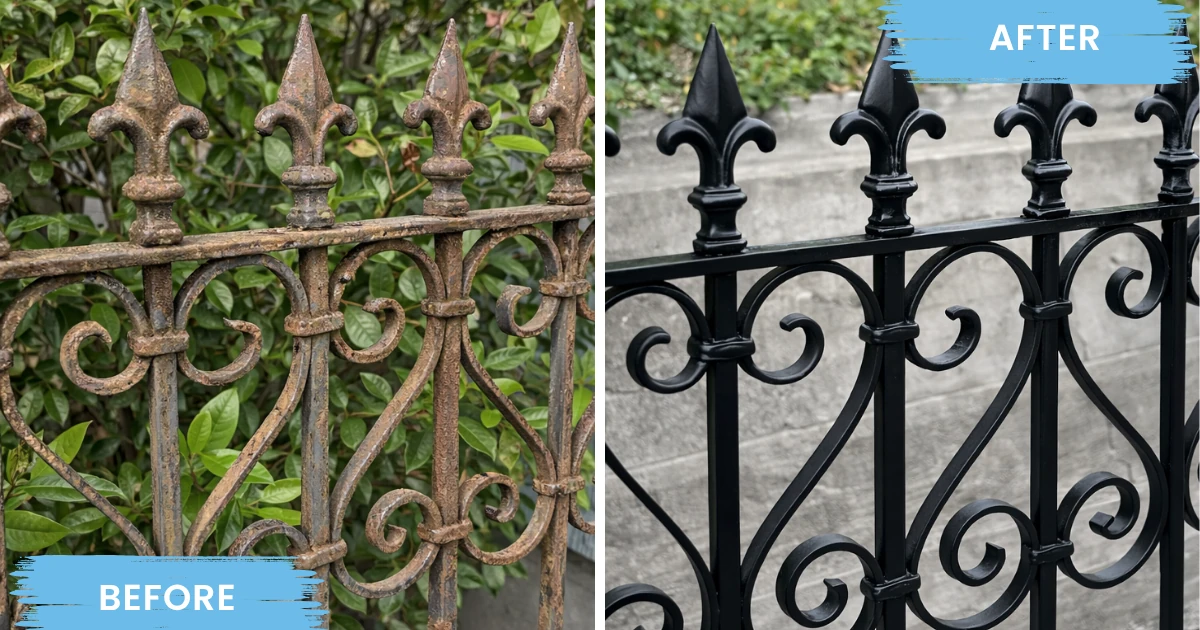
If you live in the Northeast, especially in coastal areas of New York or Connecticut, you already know how quickly metal surfaces can take a hit. Between salty air, road treatments in winter, and constant moisture, rust has a way of showing up fast and spreading even faster.
That leads many homeowners to ask a very practical question: Can I paint over rust?
The short answer is yes, you can paint over rust. But the long answer is where the real value lies. Doing it correctly is the difference between a quick cosmetic fix and a long-lasting, professional result.
At A.G. Williams Painting Company, we regularly help homeowners restore railings, fences, metal doors, and structural elements. In this guide, we will walk you through exactly how to paint over rust the right way so your results look great and last.
Yes, You Can Paint Over Rust
Painting over rust is not only possible, it is often the most practical solution for restoring metal surfaces without full replacement.
However, it is important to understand one key principle. Paint alone does not stop rust unless the surface is properly prepared. Rust is an active process, meaning corrosion will continue underneath paint if it is not addressed first.
That said, modern products have made it easier than ever to successfully paint over rust.
Homeowners today have access to:
- Rust inhibiting primers
- Direct to metal paints
- Rust converter coatings
- Spray and brush application options
Brands like Rust Oleum have become well known for making these products accessible, but the real success comes down to preparation and technique.
How to Paint Over Rust the Right Way
If you want a finish that looks clean and holds up over time, preparation is everything. Here is a step by step breakdown of how professionals approach painting over rust.
Step 1: Remove Loose Rust and Paint
The first and most important step is removing any loose material.
Think of it like this. Painting over rust without removing loose debris is like painting over peeling paint on a wall. It will not bond properly and will fail quickly. Use the following tools:
- Wire brush for heavy rust
- Sandpaper for smoothing
- Scraper for flaking paint
Your goal is not necessarily to remove every trace of rust, but to eliminate anything that is loose or unstable.
Step 2: Sand the Surface Smooth
After removing loose rust, sanding helps create a surface that paint can adhere to. This step:
- Smooths rough edges
- Feathers transitions between bare metal and existing paint
- Improves overall finish quality
For most residential projects, medium grit sandpaper works well, followed by a finer grit for finishing.
Step 3: Clean the Surface
Thoroughly A clean surface is critical for adhesion. After sanding, wipe down the surface using:
- A strong household detergent
- Degreaser if needed
- Clean water rinse
Make sure the surface is completely dry before moving on. Any leftover dust, grease, or moisture can prevent proper bonding.
Step 4: Apply a Rust Blocking Primer
Primer is one of the most important steps when you paint over rust. A high quality rust inhibiting primer:
- Seals the surface
- Prevents further oxidation
- Creates a stable base for your topcoat
Some modern paints claim to eliminate the need for primer, but in most cases, using one will significantly improve durability.
Step 5: Choose the Right Paint
When selecting your paint, look for products specifically designed for metal. You will typically have two options:
Spray Paint
- Provides a smoother finish
- Great for railings and detailed surfaces
- Easier to blend with surrounding areas
Brush or Roll Applied Paint
- Better for larger surfaces
- Allows for thicker coverage
- More control in certain applications
Matching the existing sheen is also important. If the surrounding surface is glossy, your repair should match to avoid visible differences.
Step 6: Consider Rust Converters
In some situations, removing all rust is not practical. This is where rust converters come in. These products:
- Chemically transform rust into a stable compound
- Allow you to paint directly over treated areas
- Reduce the need for aggressive scraping
However, they do have limitations. While they stop the rusting process, they do not restore the original strength of the metal. They also tend to leave a textured finish, which may show through the paint.
Step 7: Apply Paint Evenly
When it is time to paint, apply thin, even coats rather than one thick layer. This approach:
- Improves adhesion
- Reduces drips and uneven texture
- Creates a more professional finish
Allow proper drying time between coats, as recommended by the manufacturer.
Should You Paint the Entire Surface or Just the Rust Spot?
One of the most common questions homeowners ask is whether they should touch up a small rusted area or repaint the entire surface.
While spot treatments can work, repainting the entire surface often provides better results because:
- Color and sheen are consistent
- The finish looks cleaner and more intentional
- You avoid visible patchwork
At A.G. Williams Painting Company, we often recommend full surface repainting for railings, doors, and exterior metal features to ensure a uniform, polished look.
When Painting Over Rust Is Not Enough
There are cases where painting alone is not the right solution. If the metal is:
- Structurally compromised
- Severely pitted
- Flaking extensively
It may need repair or replacement before painting. This is especially important for safety related elements like stair railings or load bearing components.
Common Mistakes to Avoid
If you are planning to paint over rust, here are some pitfalls to watch out for:
- Skipping surface preparation
- Painting over wet or dirty surfaces
- Using the wrong type of paint
- Applying paint too thickly
- Ignoring primer when it is needed
Avoiding these mistakes will dramatically improve your results.
How Long Will Paint Over Rust Last?
The lifespan of your project depends on:
- Quality of preparation
- Type of products used
- Environmental exposure
- Application technique
With proper prep and high quality materials, a painted metal surface can last several years before needing maintenance. Without proper prep, failure can happen in a matter of months.
When to Call a Professional
While painting over rust can be a DIY friendly project, there are situations where hiring a professional makes sense:
- Large or complex metal surfaces
- Hard to reach areas
- Decorative or high visibility features
- Severe rust damage
A professional team like A.G. Williams Painting Company brings the tools, experience, and product knowledge needed to ensure a long lasting result. If you are unsure about the condition of your metal surfaces or want help achieving a professional finish, A.G. Williams Painting Company is always here to help guide you through the process.