Here is a quick test every deck owner should know: sprinkle a handful of water on your deck boards. If the water beads up and rolls off, your sealant is doing its job. If the water soaks straight into the wood within a few minutes, your deck is telling you it needs attention. This simple water absorption test is one of the most reliable ways to answer the question homeowners across New York and Connecticut ask us every spring and fall: how often to stain a deck?
The honest answer is that it depends. Stain type, wood species, sun and shade exposure, and the uniquely demanding Northeast climate all play a role. As a rule of thumb, most wood decks benefit from restaining every two to three years, but the right schedule for your home could be anywhere from one year to five. This guide walks through everything you need to know, from product-by-product recoating timelines to the warning signs that mean your deck cannot wait another season.
How Often to Stain a Deck: Timelines by Product Type
The single biggest factor determining how often you need to restain is the opacity of the product on your deck. More pigment means more protection against ultraviolet light and longer life between applications. Here is a breakdown of the four main categories:
A note on manufacturer claims: paint and stain brands often advertise impressive longevity numbers on their packaging. Those figures reflect ideal laboratory conditions. In the real world, especially in the Northeast’s four-season climate, performance consistently lands at the shorter end of the advertised range. Plan conservatively and inspect your deck each spring and fall.
Sealers and Clear Finishes
Clear sealers and water repellents offer moisture protection but contain no pigment, so they provide virtually no defense against ultraviolet rays. Without UV protection, wood fibers break down and the surface turns gray. Decks treated with a clear sealer typically need a fresh coat every one to two years, and in particularly harsh or exposed conditions, an annual application is the more reliable schedule. If you choose a clear sealer, pair it with a UV-blocking topcoat or plan to restain more frequently.
Transparent and Semi-Transparent Stains
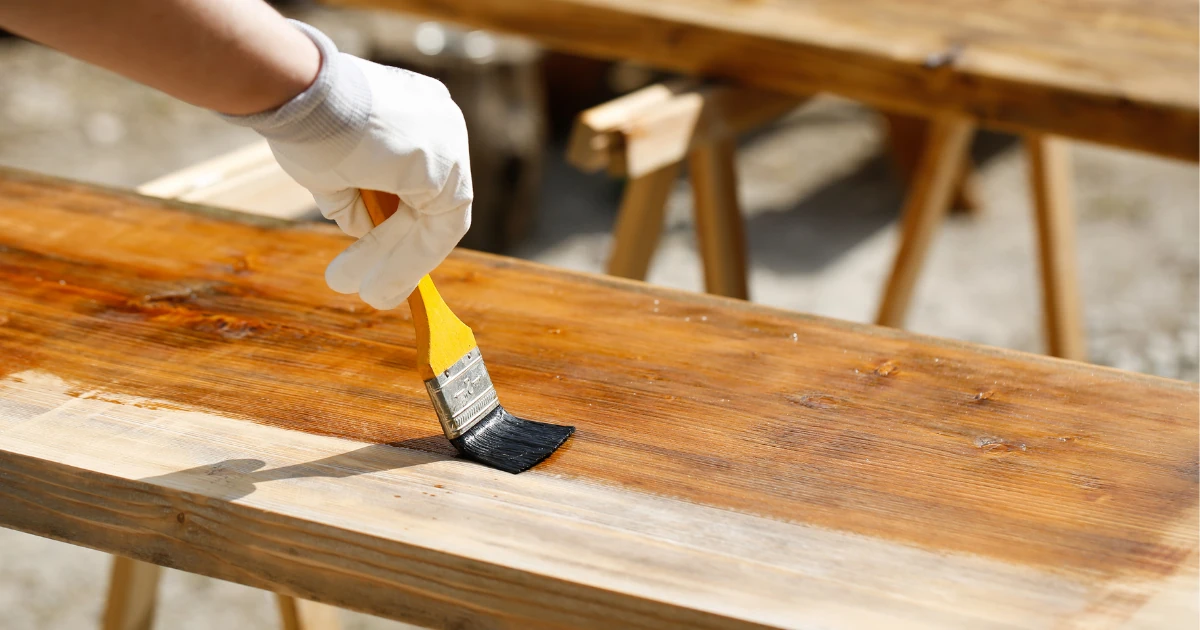
Transparent stains add a light wash of color while keeping the natural wood grain visible, but their thin pigment layer wears off quickly under foot traffic and weather. Expect to recoat every one to two years on horizontal deck surfaces. Semi-transparent stains are the most popular choice for a reason: they balance beautiful color, visible wood grain, and real protection. On deck boards, plan on recoating every two to three years. On vertical surfaces like railings and posts, which shed water and receive no foot traffic, a semi-transparent stain can last three to five years between applications.
Solid Stains
Solid stains behave similarly to paint, forming an opaque film on the surface that provides the longest protection, typically three to five years, and the strongest UV resistance. They are a smart choice for older or weathered decks that have lost their natural beauty. The tradeoff is that solid stains can peel over time, especially if applied coat after coat without proper stripping. Once a deck has multiple layers of solid stain, future maintenance may require a full strip and refinish rather than a simple recoat.
Why NY and CT Decks Need More Frequent Attention
National maintenance guides are written for average conditions. If your deck sits in Westchester County, Fairfield County, or anywhere else in the Northeast, average does not describe your climate. Here is what makes this region especially demanding on exterior wood.
Freeze-Thaw Cycles
This is the single most damaging force at work on a Northeast deck. When moisture seeps into unsealed wood pores and the temperature drops below freezing, that water expands by roughly nine percent. It forces wood fibers apart, creating microscopic cracks. Each new freeze-thaw cycle widens those cracks further. Over a single winter, a deck can go through dozens of these cycles, and the cumulative damage adds up fast. Keeping a fresh, intact moisture barrier on your deck boards is the most important thing you can do to extend the life of the wood.
Snow, Ice, and Salt
Snow creates weeks of sustained dampness that accelerates rot. Rock salt and chemical ice melts, while effective on driveways, cause pitting, discoloration, and surface degradation on wood decks. If you need to treat your deck in winter, calcium chloride or calcium magnesium acetate are gentler alternatives. Coastal communities in Connecticut and Rockland County also contend with salt air, which accelerates corrosion on fasteners and adds another moisture variable to manage.
High Humidity and Heavy Rainfall
New England springs are wet, and summer humidity remains high. Moisture in the air slows how quickly a deck dries between rain events, and persistently damp wood is an open invitation for mold, mildew, and wood rot. A quality stain or sealer creates the barrier that keeps that moisture from penetrating the wood fibers in the first place.
When is the Right Time to Stain in NY and CT?
Late spring, from May through June, and early fall, from September through October, are the optimal windows for deck staining in our region. Fall application is particularly valuable because it sets up a fresh protective layer before the most damaging season of the year. Avoid application when temperatures re below 50 degrees or above 90 degrees. Summer heat can cause stain to dry too quickly, leaving an uneven, blotchy finish. Always check that at least 24 to 48 hours of dry weather follow the application.
When in Doubt, Let a Professional Take a Look
Knowing how often to stain a deck is one thing. Having the time, equipment, and expertise to do it correctly is another. Deck preparation alone, which includes stripping, cleaning, pressure washing, brightening, and drying, takes more time than most homeowners expect.
Skipping steps or rushing the prep is the leading cause of deck stain failure. At A.G. Williams Painting Company, our team has been caring for the decks, railings, and exterior woodwork of homeowners across the Bronx, Westchester, Dutchess, Putnam, and Rockland Counties in New York and Fairfield County in Connecticut for decades.
We know this climate, and we know what it takes to keep a wood deck looking great and performing well through every season. Whether your deck needs a simple recoat, a full strip and refinish, or some board repairs before staining, we are here to help. Visit our exterior painting and deck services page to learn more about how we approach deck staining and exterior woodwork.
Ready to get started? Request a Proposal, and a member of our team will be in touch to schedule a convenient time to assess your deck.